Sam Bright-Thonney

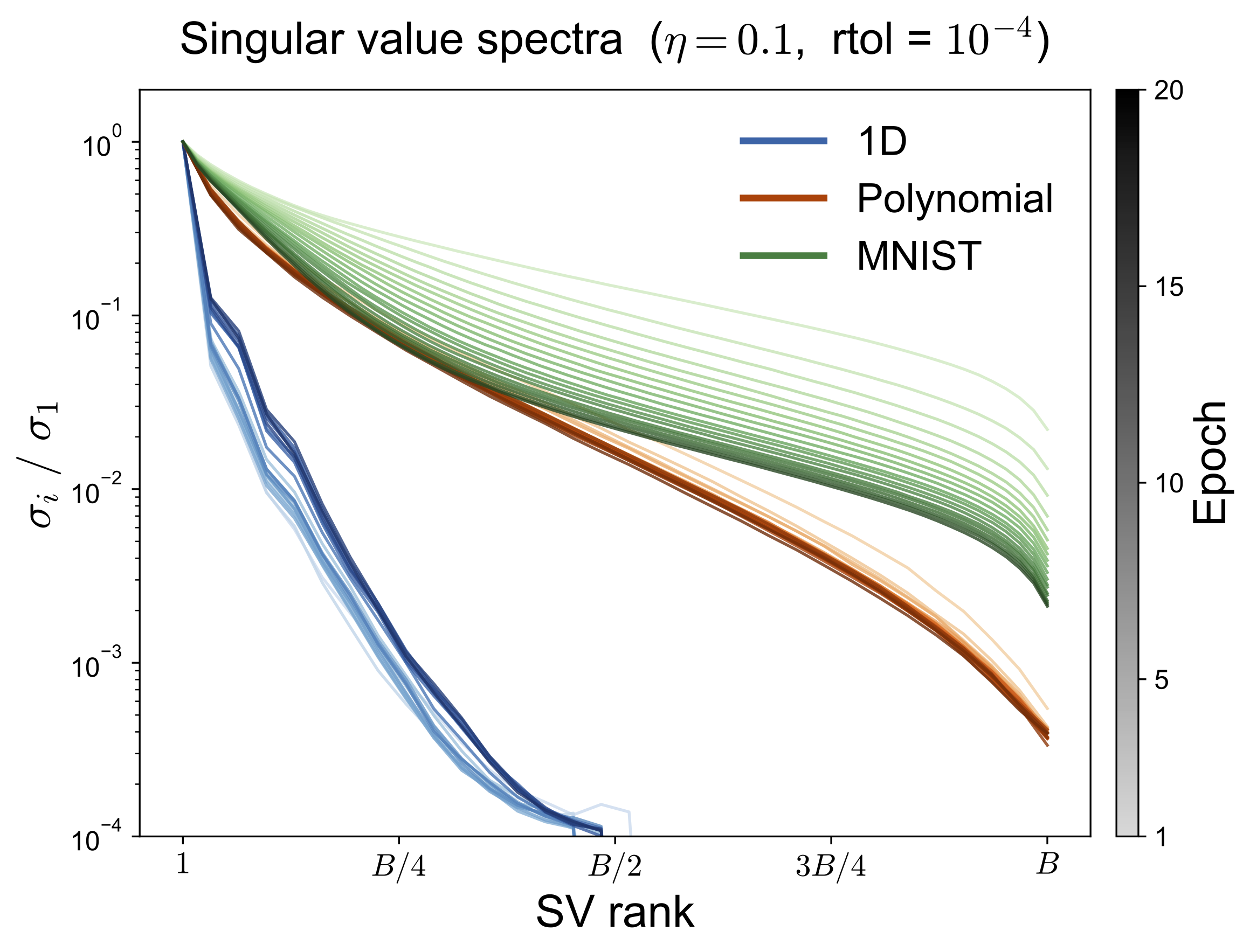
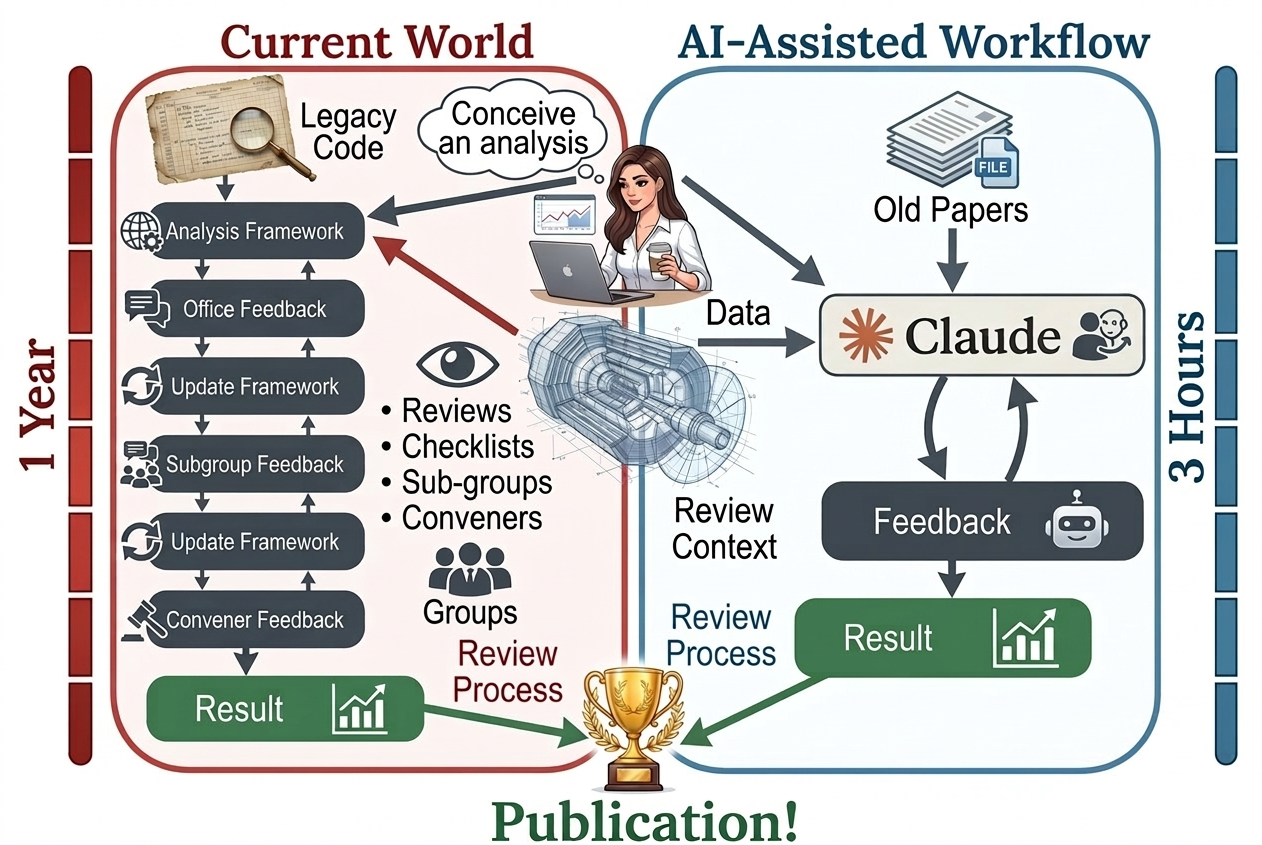
I am an IAIFI Fellow at MIT, where I work on problems at the intersection of AI and physics. Recently I’ve been using AI to automate and accelerate research in the physical sciences. I also developed a new optimizer. You can find my CV here.
During my time at IAIFI, my research interests have shifted squarely towards fundamental questions in AI. I’m particularly excited about the nascent movement towards a “science of AI” (see e.g. here and here), and I feel there’s lots progress to be made in the “phenomenology” of AI (to borrow a term from theoretical physics). This roughly means: empirically-grounded work that seeks to understand, characterize, and build predictive/explanatory effective theories of complex model behavior, without relying on intractable first principles calculations.
From a fundamental physics perspective, AI is in a very exciting but familiar place: “experimental” innovations (LLMs, etc.) have run far beyond what our theories can explain. In the 20th century, an analogous situation in physics led to quantum chromodynamics, electroweak unification, and the development of the Standard Model. In this century, I think that understanding AI will be an equally fundamental and animating problem, and an essential one to make progress on if we are to use these tools responsibly.
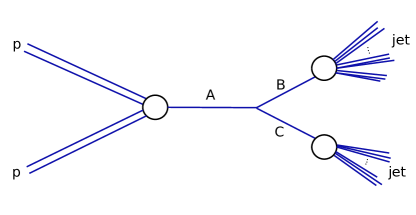
Before joining IAIFI, I completed my PhD in physics at Cornell University, where I worked on the CMS experiment at CERN’s Large Hadron Collider. My thesis work included a first-of-its-kind analysis looking for dijet resonances using machine learning, and a pair of challenging searches for inelastic dark matter in final states with soft/displaced leptons.
I’m always happy to chat with new people and find new collaborators – feel free to reach out!
news
| Jul 10, 2025 | This site is finally functional! Amazing things happen during cluster maintenance. |
|---|
latest posts
selected publications
-
-
-
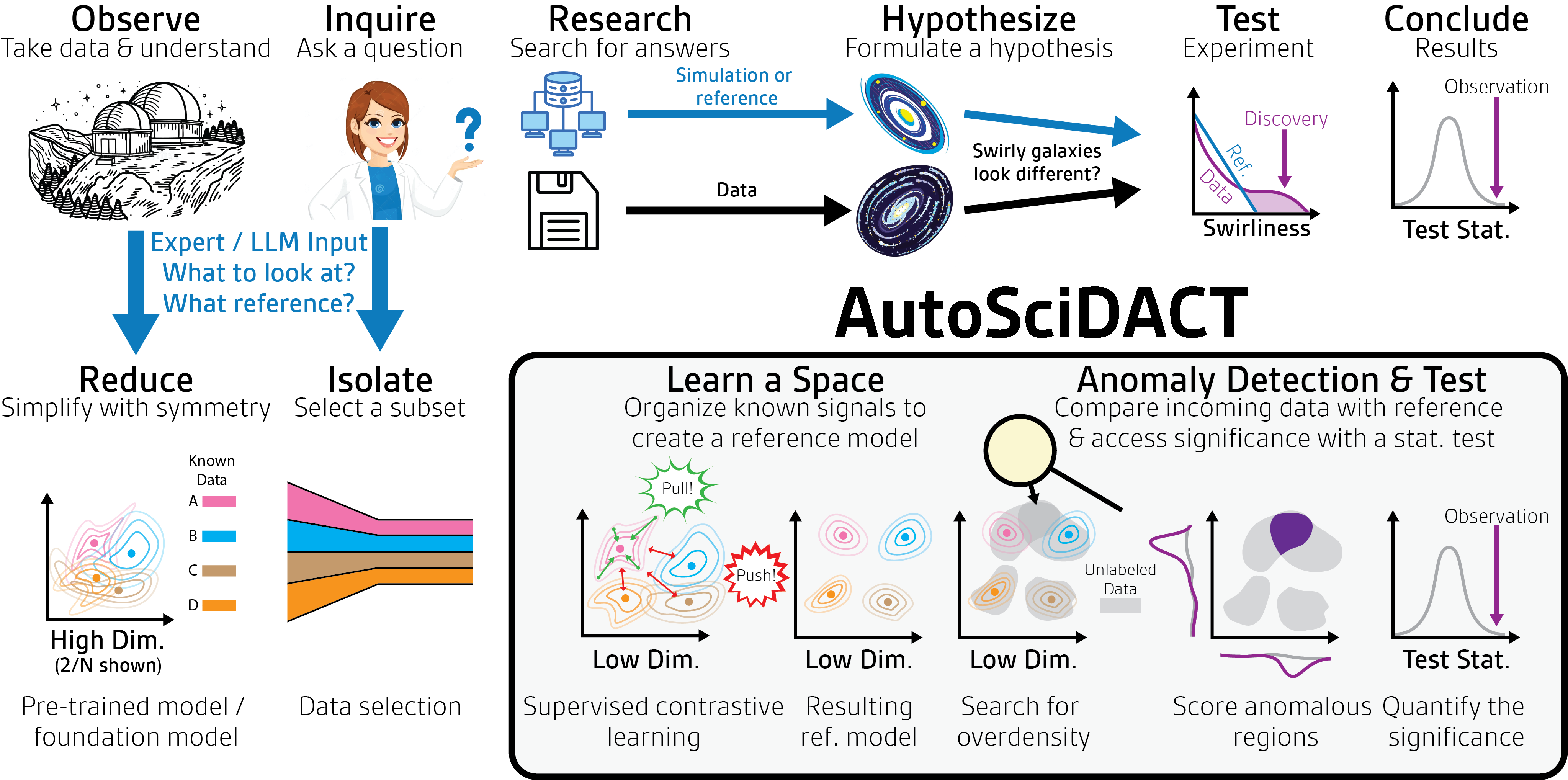 AutoSciDACT: Automated Scientific Discovery through Contrastive Embedding and Hypothesis TestingJun 2025